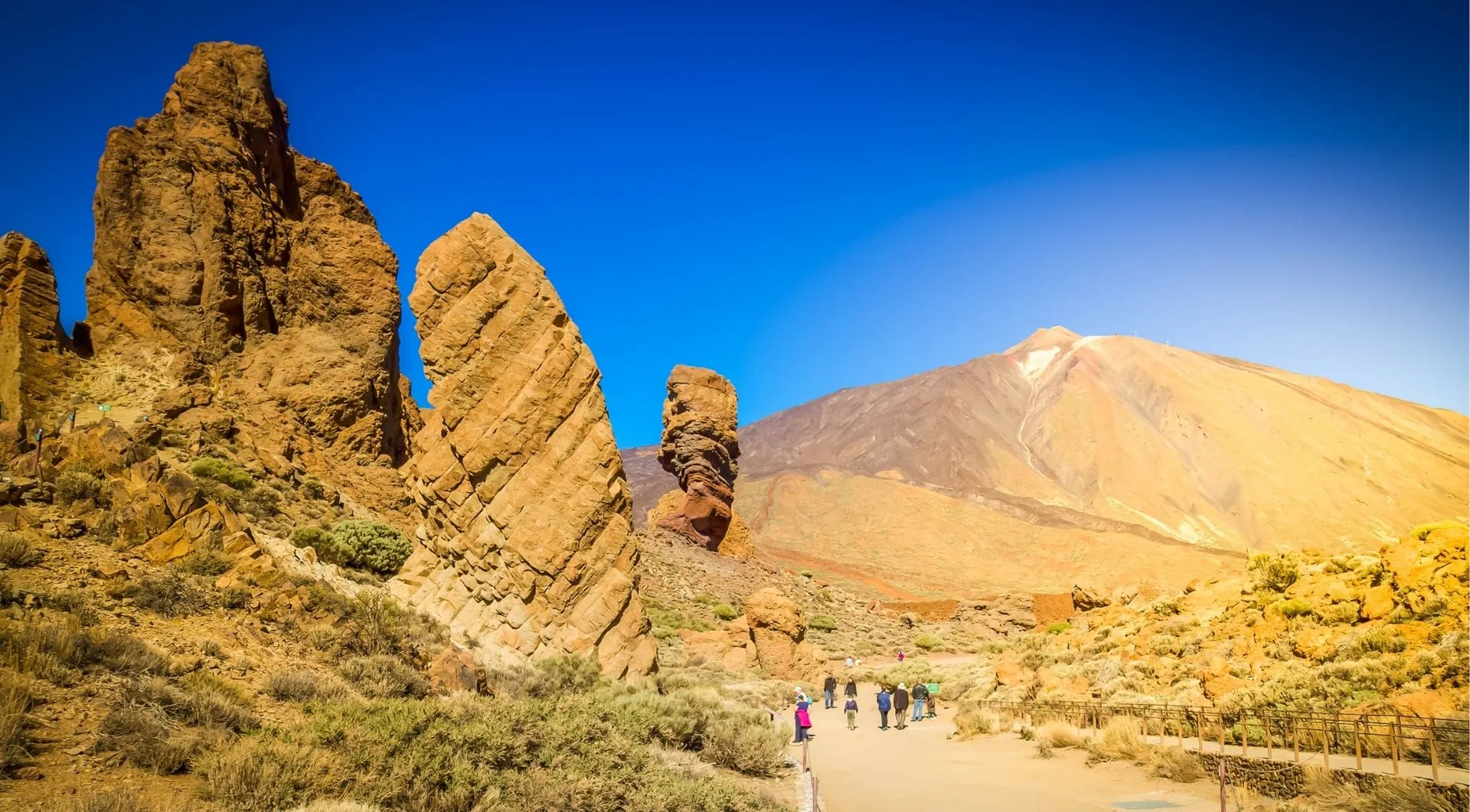
- 18,990 haUNESCO World Heritage park
- 1,199 mVertical rise on the cable car
- €152026 summit permit, non-residents
- ~1 hourDrive up from the main resorts
- Bortle 2Starlight Reserve night sky
The Cable Car Does Not Take You to the Summit
The Teide cable car ends at La Rambleta, 3,555 m. The true summit is 3,715 m, about 160 vertical metres higher, and the final Telesforo Bravo trail (PNT 10) needs its own reservation. A cable-car ticket does not grant it, and rangers check permits and photo ID at the trailhead.
This is the single most common reason people come away from Teide disappointed — and it is entirely avoidable. Three separate things, three separate bookings:
- The national park — freeRoads, viewpoints, Roques de García and the whole caldera floor. No ticket, no permit, no booking.
- The cable car — paid ticketBase station 2,356 m to La Rambleta 3,555 m. Book a time slot; it sells out days ahead in peak season.
- The summit — separate permitPNT 10 Telesforo Bravo, booked only through TenerifeON. €15 for non-residents since 19 January 2026.
- Two trails need neitherFrom the top station, Trail 11 to Mirador de La Fortaleza and Trail 12 to Mirador de Pico Viejo are free and permit-free.
Why Mount Teide Is Worth a Day Even If You Never Reach the Summit
What the park actually gives you, which parts cost money, and when to skip the upgrades.
For most Tenerife visitors, yes — and the best of it starts long before any ticket barrier. The road climbs from the coast through Canary pine forest into a volcanic basin roughly 10 by 17 kilometres wide, and on a good day you pass through the island's cloud layer and come out in sunshine with a white sea of clouds spread out below you. The ground up here is strange enough that ESA drove test rovers more than 13 km across the pumice at Minas de San José, and NASA calibrated an instrument for the Perseverance Mars rover nearby. What that means for your day is simple: the scenery is the free part. The cable car adds altitude and island views, a guided climb adds Spain's highest point, and staying after dark adds one of Europe's best night skies — but those are upgrades, not requirements. If wind shuts the lift, the caldera floor is still worth the drive, which is exactly why it pays to decide what you actually want before you book.
What makes Teide different
- Spain's highest mountain and, measured from the ocean floor, the third-tallest volcanic structure on Earth
- The Las Cañadas caldera — lava fields, pale pumice plains and the Roques de García rock formations
- The sea of clouds: the trade-wind inversion layer usually sits below the park, so cloudy at the coast often means sunshine up top
- A landscape space agencies use as a Mars analogue for rover and instrument testing
- Certified Starlight Reserve skies, protected by law since 1988 for the Teide Observatory
What a Teide day usually includes
- The TF-21 caldera drive with viewpoint stops at Boca Tauce, Llano de Ucanca and Los Azulejos
- Time at Roques de García — a 3.5–4.5 km loop, or ten minutes at the Mirador de la Ruleta
- Optional round-trip cable car to La Rambleta, plus the two permit-free viewpoint trails
- A guide, if you book one: geology, the 1909 eruption, the Guanche legends and where to look
- Hotel pickup from the south or north coast on most organised tours — no mountain driving
Which Teide Experience Is Right for You?
Park, cable car, summit or after dark — jump to the one that fits your trip.
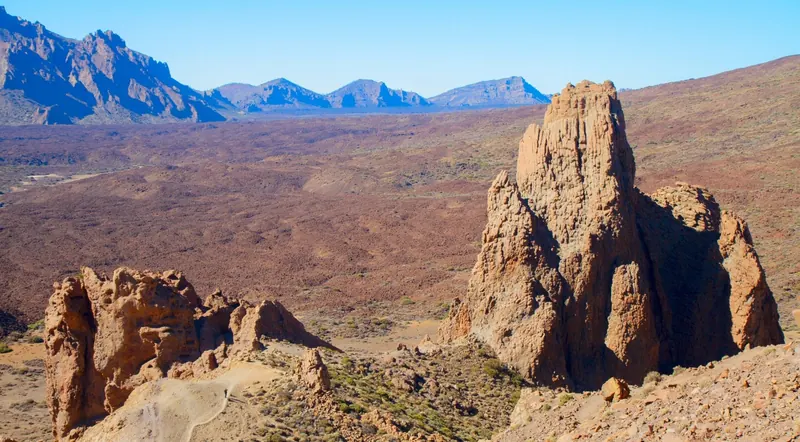 See the National Park
Volcanic landscapes, viewpoints and Roques de García. Free to enter, no permit.
Best for first-time visitors and anyone here for the scenery.
What you'll see →
See the National Park
Volcanic landscapes, viewpoints and Roques de García. Free to enter, no permit.
Best for first-time visitors and anyone here for the scenery.
What you'll see →
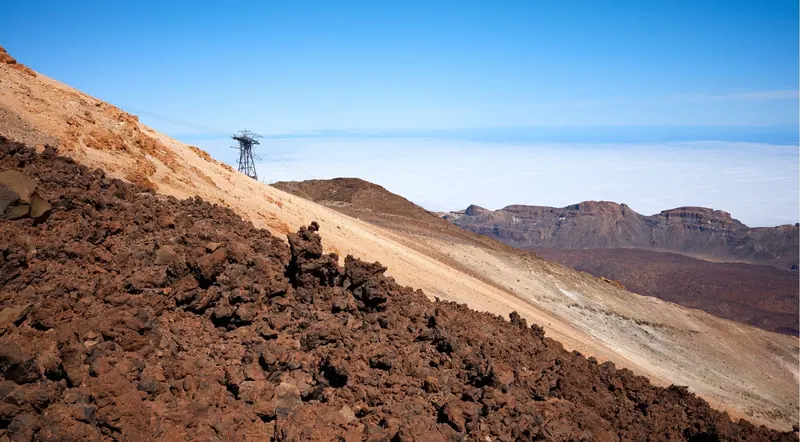 Take the Cable Car
Reach 3,555 m in about eight minutes, then walk two permit-free viewpoint trails.
Best for high-altitude views without a serious hike.
Is it worth it? →
Take the Cable Car
Reach 3,555 m in about eight minutes, then walk two permit-free viewpoint trails.
Best for high-altitude views without a serious hike.
Is it worth it? →
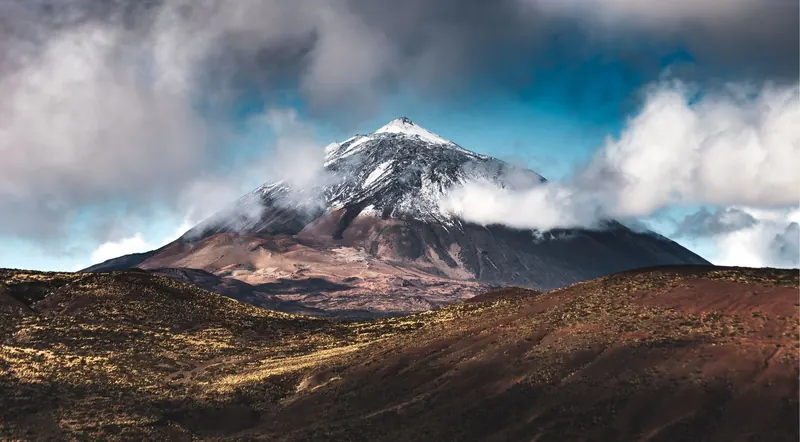 Reach the Summit
The final 160 m to the crater at 3,715 m, on the permit-only Telesforo Bravo trail.
Best for hikers who want to stand on Spain's highest point.
Permits & guided climbs →
Reach the Summit
The final 160 m to the crater at 3,715 m, on the permit-only Telesforo Bravo trail.
Best for hikers who want to stand on Spain's highest point.
Permits & guided climbs →
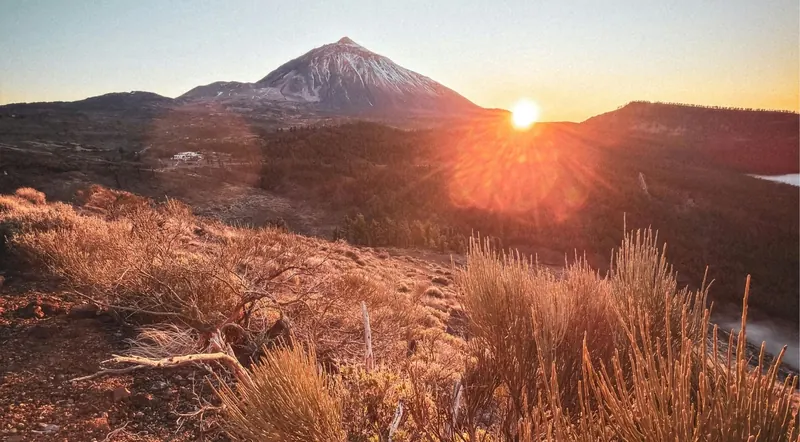 Sunset & Stargazing
The Teide shadow over the Atlantic, then telescopes under a Bortle 2 sky.
Best for couples, photographers and astronomy fans.
Compare night tours →
Sunset & Stargazing
The Teide shadow over the Atlantic, then telescopes under a Bortle 2 sky.
Best for couples, photographers and astronomy fans.
Compare night tours →
Check Availability & Prices
The Volcano Teide day tour is the simplest first booking: the operator runs the cable car itself, so the round-trip ticket and the hotel transfer come together. Pick a date below.
Run by Volcano Teide, the cable-car operator, with pickup from the north and south of the island and a guide in up to six languages. If wind closes the lift the tour still runs an alternative route and the cable-car portion of the price is refunded — a rare bit of honesty in a weather-dependent category.
Teide Tours Compared: What Each One Is For, and the One Thing to Check
A tour badged “Mount Teide” can mean viewpoints only, the cable car, or the true summit — the difference is buried in the Includes list. Here is what separates them.
| Experience | Best for | Cable car | Summit | The one thing to check |
|---|---|---|---|---|
| Park sightseeing tour | An easy first visit, no driving | Usually not | No | Whether the coach actually stops in the caldera or just at roadside viewpoints |
| Cable car + transfer | Resort visitors who want the altitude | Included | No | That the ticket is round-trip, and what happens if wind closes the lift |
| Guided summit climb | Standing at 3,715 m | Often extra | With permit | That the PNT 10 permit is in the price — some listings say “with permit” in the title and sell it separately |
| Sunset + stargazing | Couples, photographers, a distinctive evening | No | No | Whether real telescopes and a Starlight-certified guide are included, or just a viewpoint stop |
| Observatory visit | Astronomy fans, daytime | No | No | That observatory entrance is included — and that you get there under your own steam |
| Quad, buggy or jeep | Activity-led days, the journey as the point | No | No | How much of the route is actually inside the national park |
Prices, ratings and review counts on this page were checked on 1 September 2026 and move over time. “With permit” in a title is not the same as “permit included” in the price — the Includes list is the only thing that settles it.
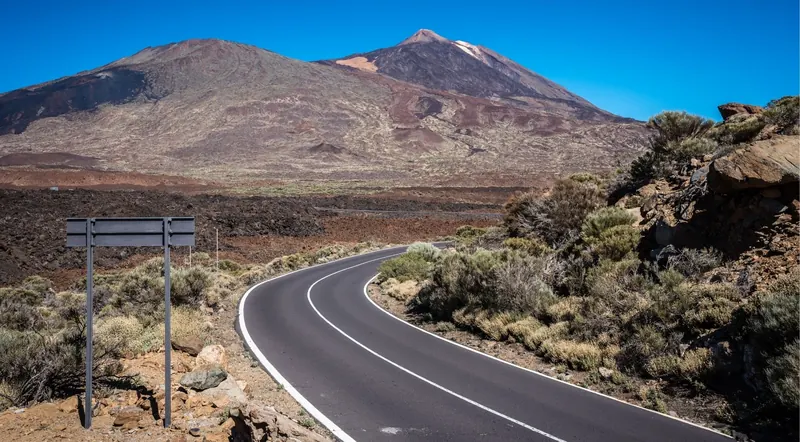 Best observatory visit
Mount Teide Observatory Guided Tour
Includes: entry to the Izaña observatory, a guide, two solar telescopes and access to a professional night telescope. Transport is not included.
Check availability
Best observatory visit
Mount Teide Observatory Guided Tour
Includes: entry to the Izaña observatory, a guide, two solar telescopes and access to a professional night telescope. Transport is not included.
Check availability
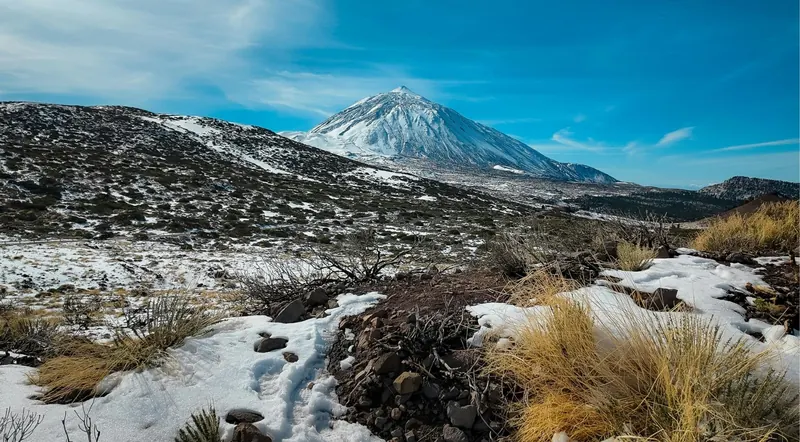 Best activity day
Teide ATV Tour, Daytime or Sunset
Includes: your own quad on a guided small-group route from Chío into the park, with stops at Pico Viejo and the Zapatilla de la Reina rocks, a drink and snack, helmet, jacket and gloves. No pickup: you meet beside the DISA station in Chío, with your driving licence and a €100 cash deposit per quad.
Check availability
Best activity day
Teide ATV Tour, Daytime or Sunset
Includes: your own quad on a guided small-group route from Chío into the park, with stops at Pico Viejo and the Zapatilla de la Reina rocks, a drink and snack, helmet, jacket and gloves. No pickup: you meet beside the DISA station in Chío, with your driving licence and a €100 cash deposit per quad.
Check availability
What You'll See in Teide National Park: Caldera, Roques, Sea of Clouds
From Roque Cinchado and the Llano de Ucanca to Pico Viejo's crater and the view out to La Gomera — the stops that make the drive.
Las Cañadas
The caldera itself: a basin roughly 10 by 17 km, formed when an earlier, larger volcano collapsed. You drive across its floor at over 2,000 m with Teide filling the windscreen.
Roques de García
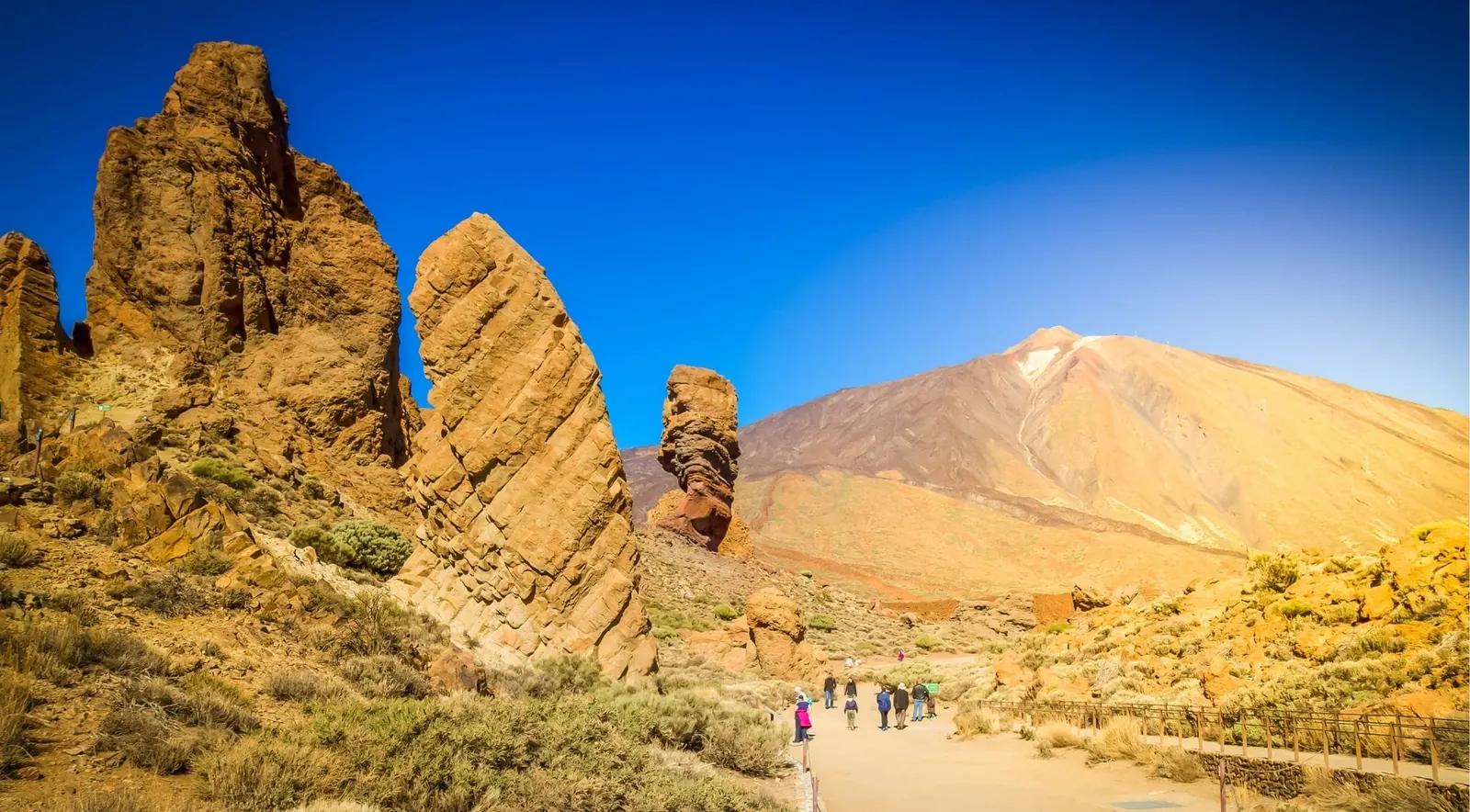
The park's most photographed rocks, opposite the Parador. Roque Cinchado — the “Finger of God” that appeared on the old 1,000-peseta note — anchors an easy 3.5–4.5 km loop.
The sea of clouds
Tenerife's trade-wind inversion traps cloud below roughly 1,500–2,000 m. Climb through it and the coast's grey afternoon becomes a white floor stretching to the horizon.
Pico Viejo
Teide's neighbour at 3,135 m, with a crater about 800 m across. Trail 12 from the cable-car top station looks straight down into it, with La Gomera beyond.
Mars-like ground
At Minas de San José, ESA teams drove planetary rovers more than 13 km and gathered over three terabytes of field data. NASA tested a Perseverance instrument in the Fortaleza area.
Four islands on a clear day
From the upper mountain the view can reach La Gomera, La Palma, El Hierro and Gran Canaria — the same horizon Teide's shadow falls across at sunset.
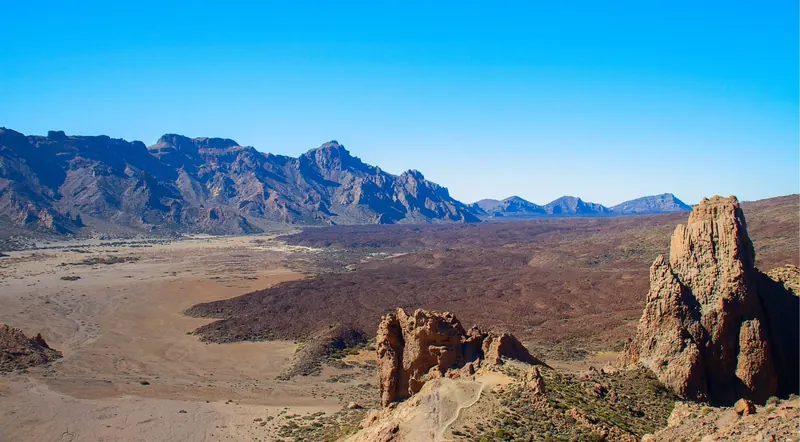 Best small-group park tour
From South Tenerife: Teide National Park Tour
Includes: hotel pickup and drop-off, a maximum of eight passengers and a flexible start. The cable car is not included — add it separately, or book our top pick instead.
Check availability
Best small-group park tour
From South Tenerife: Teide National Park Tour
Includes: hotel pickup and drop-off, a maximum of eight passengers and a flexible start. The cable car is not included — add it separately, or book our top pick instead.
Check availability
 Best full-island day
Teide National Park, Masca, Icod & Garachico Tour
Includes: pickup across Tenerife, a guide certified by the Canary Islands government and commentary in six languages. Cable car and the Drago Milenario ticket are extra.
Check availability
Best full-island day
Teide National Park, Masca, Icod & Garachico Tour
Includes: pickup across Tenerife, a guide certified by the Canary Islands government and commentary in six languages. Cable car and the Drago Milenario ticket are extra.
Check availability
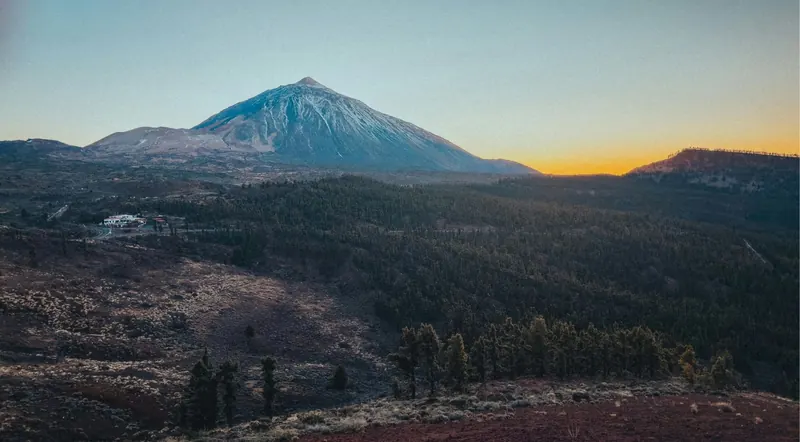
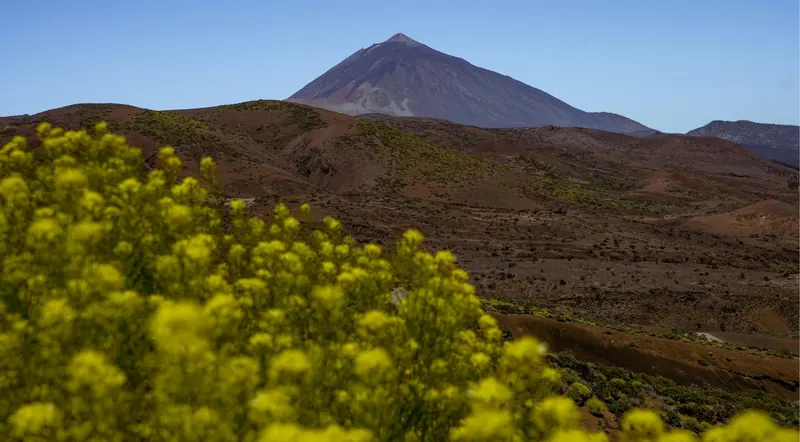
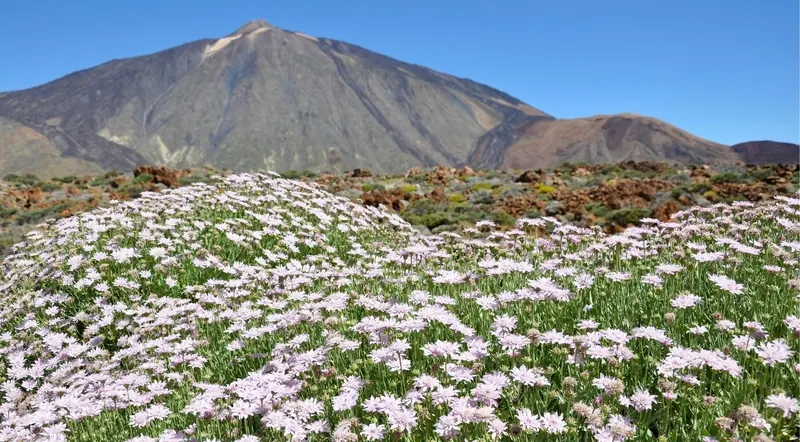
Teide in Pictures: Caldera, Snow, Bloom and Sunset
Scroll or drag to browse — the same landscape in winter snow, spring bloom and evening light.
Is the Teide Cable Car Worth It? Yes on a Clear Day, No in Cloud
From the base station at 2,356 m to La Rambleta at 3,555 m — what you gain, what you don't, and when to skip it.
For most first-time visitors, yes — provided the weather cooperates. In roughly eight minutes you rise almost 1,200 vertical metres and step out at 3,555 m, which is an unusual amount of high mountain for very little effort. From the top station two short trails are free and need no permit: Trail 11 to the Mirador de La Fortaleza, looking north over the Orotava valley, and Trail 12 to the Mirador de Pico Viejo, looking down into an 800-metre crater with La Gomera on the horizon.
The honest counter-argument: it is not the scenery. If what draws you is the volcanic landscape — Roques de García, the Llano de Ucanca, the drive across the caldera — you can have an excellent Teide day and never buy a ticket. And the lift is genuinely unreliable: high wind and ice close it often enough that it should never be the only reason you drove up. Book a time slot in advance, check the operator's status the morning of your visit, and treat the ride as the upgrade it is.
One more thing the listings bury: the cable car is not for everyone. The operator does not carry pregnant travellers, people with cardiac or serious respiratory conditions, or children under 3, and it is not wheelchair accessible. Closed, high-grip shoes are compulsory — beach shoes and heels are refused at the gate.
If you want the cable car
Book it as part of a day rather than as a standalone ticket, and the transfer, the guide and the timed slot are handled together. That is exactly what our top pick is — the operator running the lift also runs the tour, so the round-trip ticket sits inside the price rather than beside it.
It is also the option with a stated answer to the wind problem: if the lift is shut the day still runs, on an alternative route, and the cable-car share of the price comes back.
See dates and prices for our top pick →If you'd rather skip it
Nothing about the caldera floor requires a ticket. Roques de García, the Llano de Ucanca, Boca Tauce and the TF-21 drive are all free, and a guided day built around them costs less than one built around the lift.
This is the honest choice for anyone visiting in unsettled weather, travelling with someone the cable car will not carry, or simply more interested in lava fields than in altitude.
Compare what each kind of tour covers →
If you'd rather skip it
Day Trip to Volcano Teide Without Cable Car
Includes: the guided park excursion, transport from the north, south or Santa Cruz, the “Teide Legend” audio guide in eight languages and entry to the Science and Legend exhibition. No cable-car ticket, by design.
Check availability
The cheapest full day
Teide National Park Full-Day Tour with Pickup
Includes: hotel pickup from the south, air-conditioned transfers and a guide, over about eight hours. Whether lunch and the cable car are bundled varies by the option you select — read the Includes list on the option before you pay.
Check availability
Want to Stand on the Actual Summit? Here's How the Permit Works
From the base station to the crater at 3,715 m — the four stages, the reservation nobody expects, and the guided climbs that handle it.
-
Base station — 2,356 m
Where the cable car starts, off the TF-21. Free parking, a café and toilets; it fills from about 10:00 to 15:00. This is also where guided summit groups usually meet.
-
La Rambleta — 3,555 m
The top station, about eight minutes up. Everyone with a cable-car ticket gets this far. The two free viewpoint trails start here, and so does the permit check.
-
Telesforo Bravo trail — permit only
Roughly 600 m each way with gradients reaching 60%, so allow 40 minutes to an hour up. A ranger checks your named PNT 10 reservation and photo ID before you set foot on it.
-
The crater — 3,715 m
An 80-metre crater venting hot sulphurous gas: the clearest sign anywhere in the park that this is a live volcano. On a clear day the view takes in four other Canary Islands.
-
Booking the permit yourself
PNT 10 reservations are handled only through TenerifeON — not the old national-parks portal that many guides still cite. New slots open Mondays at 07:00 Canary time on a rolling four-week window and sell out fast; climbing without one risks a fine of up to €600.
The trap to watch for: a listing can say “with official permit” in its title while the Includes list shows the permit and the cable-car ticket are bought separately, after booking. Before you pay, check that the words permit and cable car appear under Includes and not under what's excluded. All three climbs below have the permit in the price — the cable car is the part that varies. And there is one legitimate way round the reservation entirely: stay the night at the Refugio de Altavista at 3,260 m, whose booking covers the trail permits provided you're off the summit trail before 09:00.
Best all-in summit climb
Guided Hike to the Peak of Mount Teide
Includes: the summit and trail permits, a guide, headlamp, poles and gloves, insurance and hotel pickup. The cable-car ticket is extra, quoted at €22 per person.
Check availability
Best if you have no kit
Teide Peak Hiking 3715m
Includes: the timed summit permit, a qualified mountain guide, insurance, poles and headlamp, plus boots, coat, hat and gloves if you need them. Transport and the cable car are extra.
Check availability
Best for the sunrise shadow
Teide Night Hike to Watch Sunrise and Summit
Includes: both paid permits per person, guiding, headlamps, poles, thermal blankets, hot tea and crampons from November to April. Transfer and the €24 cable-car descent are extra.
Check availability
Sunset and Stargazing: the Teide Shadow, Then One of Europe's Darkest Skies
Above the cloud layer, out of the observatory's light-protection zone, with telescopes that show what your eyes can't.
Daytime Teide is impressive. After sunset it becomes a different destination altogether. As the sun drops, the mountain throws a perfect triangular shadow out across the Atlantic toward Gran Canaria — the largest shadow any mountain casts onto the sea anywhere in the world — while the cloud layer below turns pink. Then the sky arrives.
The reasons this works are unusually concrete: the park sits above the inversion layer in dry, stable air, and Spain's 1988 Sky Law has protected darkness around the Teide Observatory ever since. The result is a certified Starlight Reserve rated around Bortle 2, which puts Teide with Hawaii and Chile among the best astronomy sites on Earth. Under it, a decent telescope resolves Saturn's rings, Jupiter's moons, star clusters and the Andromeda Galaxy. That is the real gap between a tour and doing it yourself — anyone can drive up and look at stars, but the telescope and the guide are what turn a dark sky into things you can actually name.
Timing matters more here than anywhere else on the mountain. June to August has the most clear days, and from about June to September the bright centre of the Milky Way is in the southern evening sky; book near a new moon rather than a full one; and remember calima, the Saharan dust haze, can wash out a night at any time of year. The Perseids peak around 12 August, the Geminids around 13 December.
Best all-evening package
Teide: Guided Sunset & Stargazing Tour by Night with Dinner
Includes: an astronomer guide, one language per coach, pickup from the south or Puerto de la Cruz, park photo stops, a three-course dinner with drinks, sunset with a drink, then laser-guided stargazing through telescopes.
Check availability
Best value, most booked
Sunset and Stargazing at Teide National Park
Includes: a small-group stargazing session with Starlight-certified guides, an astrophotography portrait and a glass of cava. Pickup and warm jackets come with the VIP option only; food and the cable car are not included.
Check availability
Best for serious astronomy
Guided Large Telescope Stargazing Tour
Includes: a 32-inch Dobsonian, a 12-inch night-vision scope and a RASA 8 with a cooled astro-camera, plus a guide and your photos. Check which option you pick for transport.
Check availability
Rental Car or Guided Tour? Four Things That Decide It
Flexibility, mountain roads, permits and after-dark timing — where each option genuinely wins.
Drive yourself if you want to stop where you like
A rental car is the better choice for viewpoints, photography and unhurried hiking. You pick your own hours, go up one road and down another, and skip the 10:00–15:00 crush at the car parks. Fill the tank first — there is no petrol station inside the park.
Take a tour if you'd rather not drive the TF-21
The approach roads are paved and scenic but long and winding, and unlit after dark. If mountain driving isn't your idea of a holiday, a coach or minibus with hotel pickup removes the whole problem — and the parking problem with it.
Take a tour for the summit, almost always
A guided climb bundles the PNT 10 permit, poles, headlamp, crampons in winter and someone who has read the weather. Doing it alone means winning the Monday 07:00 booking scramble yourself and arriving with the right kit and ID.
Take a tour after dark, always
Telescopes, an astronomy guide and a warm coat are things you cannot supply from a rental car, and the buses stop long before sunset. This is the one category where a tour clearly beats doing it yourself.
The bus deserves a specific warning. Two TITSA lines reach the park — the 342 from Costa Adeje and the 348 from Puerto de la Cruz — and each runs once a day in each direction. That gives you a fixed window of roughly three to four hours, rules out sunset and stargazing entirely, and leaves you stranded and facing an expensive taxi if you miss the return. Every car-free option, with the full timetables, is in how to get to Teide without a car; for the choice by traveller type, see Teide by car or guided tour.
Planning the Day: Best Time to Go, Weather Risk and Getting There
Summer for the clearest skies, winter for snow, an early start for space — and the wind that decides whether the lift runs.
Best season
June to August is the best overall period: the park has its clearest, driest weather then, and June usually brings the red tajinaste into flower. May and September come next, with fewer clear days. No season was much quieter in 2025, when the park's visitors were spread almost evenly across the year. Winter can deliver snow-capped postcard views and road closures in the same week. Best time to visit Mount Teide compares every month and checks your date.
Best time of day
Early morning and late afternoon beat midday for light and space. Sunset brings the sea of clouds and Teide's shadow; after dark is for stars. From about 10:00 to 15:00 the car parks and the cable car are at their busiest; our hour-by-hour plan keeps you ahead of both.
Getting there
About an hour to an hour and a quarter from Costa Adeje, Playa de las Américas or Los Cristianos; roughly 50 minutes to an hour from Puerto de la Cruz. Four paved roads climb to the park — the TF-21 from the south and from the north, the TF-24 and the TF-38 — and a loop, up one and down another, is the best way to see them (our road-by-road guide). If you are weighing the drive against a booked seat, we run the numbers in is it cheaper to rent a car or take a tour?, and the Canarian hire firms are compared in car hire in Tenerife
What to wear
Beach clothes are not Teide clothes. It can be 25°C at your hotel and close to freezing at the top station, colder in wind. Bring warm windproof layers, closed high-grip shoes, sunglasses, high-factor sun cream and water — the UV at altitude burns people who feel cold.
Check the weather before you go. Strong winds close the cable car regularly, and winter snow or ice closes the mountain roads several times most years — in December 2025 the heaviest snowfall since 2016 shut every access road at once. Conditions at your beach resort tell you nothing about conditions at 3,555 m. Check the operator's status on the morning, and favour bookings with free cancellation or a stated weather policy (what you can cancel, and how late). If you are driving up, note that the main car parks fill from around 10:00 — our guide to parking at Teide covers which lots go first and the fines for leaving a car outside a marked bay.
Know Before You Go: Altitude, Facilities, Rules and Costs
What the park does not provide, what altitude does to people, and what the ticket price leaves out.
Altitude is the thing people underestimate
The cable car takes you to 3,555 m in about eight minutes with no acclimatisation at all, and mild altitude sickness is common at the top: headache, nausea, dizziness, breathlessness, fatigue. It hits hardest if you arrive dehydrated, hungover or in a hurry. Drink water, move slowly, rest when you get out, and keep the visit up top to around an hour — the operator's own advice. If symptoms get worse, go down; descending is the treatment. People with heart or serious respiratory conditions, and pregnant travellers, are not carried at all.
The park has almost no facilities — plan around that
There are no shops and no petrol stations inside the park, so fill up in Vilaflor, La Orotava, La Esperanza or Chío on the way. Food is limited to a café at the cable-car base station, the Parador and the visitor centres; there is no restaurant at the top station. Toilets exist at the base station, the two visitor centres and the Parador, and nowhere on the trails. Mobile signal is patchy. Bring your own water and something to eat, especially if you are walking.
The two visitor centres are worth a stop: El Portillo in the east for trail information, geology and a walk-through volcanic tube, and Cañada Blanca by the Parador for the human history of Las Cañadas. The Parador itself is the only hotel inside the park and the one way to be under those skies without a night drive.
Rules, and what the price doesn't cover
Stay on the trails, take nothing — no rocks, pumice or plants — and don't camp; bivouacs need a permit and designated sites, drones need one too, and fires are banned outright. Fines apply, and for the summit trail specifically climbing without a valid reservation can cost up to €600.
On cost: park entry is free and so are the viewpoints, but the cable car is a separate paid ticket, the €15 PNT 10 summit permit is separate again, and most tours exclude food and drink. Guided summit climbs commonly quote the cable-car leg on top — €22 to €24 per person is typical. Build those into the day's real budget rather than the headline price.
One reassurance, since people ask
Teide is an active volcano and the alert level is green — normal. Low-magnitude seismic swarms under Las Cañadas make the news periodically, including several in early 2026, but the scientific committee's position is that these are not precursors to a near-term eruption and pose no hazard to visitors. The last eruption was in 1909, from a vent on the northwest rift, and it lasted ten days over uninhabited ground.
Mount Teide FAQ: Permits, Cable Car, Weather and Kids
Short answers to the questions that decide what you book.
Is Mount Teide worth visiting?
Yes. Even without reaching the summit, Teide National Park offers a huge volcanic caldera, lava landscapes, Roques de García, scenic drives and views above Tenerife's cloud layer. The cable car, summit and stargazing experiences are optional additions rather than requirements.
Does the Teide cable car go to the summit?
No. The cable car reaches La Rambleta at 3,555 m. Mount Teide's summit is 3,715 m, and the final Telesforo Bravo trail requires separate access permission. From La Rambleta you can still walk two short viewpoint trails without a permit.
Do I need a permit to visit Mount Teide?
Not for ordinary sightseeing in Teide National Park. A permit is required for the final summit trail (Telesforo Bravo, PNT 10) and several controlled hiking routes. The caldera roads, Roques de García and most viewpoints can be visited without one. Since 19 January 2026 non-residents pay 15 euros for the summit permit, booked through TenerifeON.
Can I visit Teide without a tour?
Yes. Driving through the park, visiting viewpoints and walking the Roques de García loop are easy to organise independently, and park entry is free. Tours are more useful for the summit, for sunset and stargazing, and for travellers without a rental car — the two direct TITSA buses run only once each way per day.
Can I visit Teide without taking the cable car?
Yes. Some of the park's best landscapes — Las Cañadas, Roques de García, Llano de Ucanca and the TF-21 caldera drive — are reached from the road with no ticket at all. The cable car adds altitude and island views, not the scenery itself.
How long should you spend at Teide National Park?
Allow at least half a day for the drive up, the viewpoints and a few stops. Adding the cable car or the Roques de García loop fills a full day. Summit hikes, sunset trips and stargazing are better treated as their own dedicated excursion rather than an add-on.
Can children visit Mount Teide?
Yes for the viewpoints, the caldera drive and Roques de García. The cable-car operator does not carry children under 3, and the summit trail is steep and high enough that it is not suitable for young children. Stargazing tours generally are family-friendly, though some set a minimum age.
How cold is it at the top of Mount Teide?
Far colder than the coast. It can be 25°C at the beach and near freezing at the top station, colder again in wind; the Izaña station has recorded temperatures below −2°C with gusts near 100 km/h. Warm windproof layers, closed shoes and sun protection are sensible in every season.
Does the Teide cable car close because of weather?
Yes, regularly. High wind and ice close it, and winter snow can close the access roads. Check the operator's status on the morning of your visit. Some tours build this in — the Volcano Teide cable-car tour still runs if the lift is shut and refunds the cable-car portion of the price.
Is Mount Teide good for stargazing?
It is among the best places in Europe. Altitude above the inversion layer, dry stable air and darkness legally protected since Spain's 1988 Sky Law give the park a sky rated around Bortle 2 and Starlight Reserve status. Guided tours add telescopes and an astronomy guide, which is what separates a tour from simply looking up.
A day in the Masca gorge, the Drago Milenario dragon tree at Icod de los Vinos, the rebuilt lava-flow town of Garachico, the laurel forests of Anaga Rural Park, or a wine tasting in Vilaflor and the La Orotava valley — all within reach of a Teide day and worth adding if your schedule allows.
Teide Guides: Permits, Tickets, Timing and Getting There
Deeper answers to the questions this page only has room to summarise.
- Teide summit permit 2026What changed in January 2026, how TenerifeON works, the fee tiers, and the Monday-morning booking scramble.
- Is the Teide cable car worth it?What you get for the ticket, who cannot ride it, what the ticket types mean, and what to do when wind closes it.
- Cheaper to rent a car or take a tour?The worked comparison, with 2026 prices for hire, fuel, the €42 cable car and the summit ecotasa.
- Parking at Teide National ParkEvery car park, when each one fills, the €150–600 fine, and the booking scheme announced for late 2026.
- Drive or take a guided tour?Which option suits nervous drivers, families, hikers, cruise passengers and stargazers, and what each can do that the other can't.
- One day at Teide, hour by hourWhen to leave, how long the cable car takes, the 2026 opening hours, and what won't fit in a day.
- Teide without a carThe once-daily 342 and 348 buses, tours with hotel pickup, taxis, and the two places to sleep inside the park.
- Teide without a permitRoques de García, the caldera drive and the two free viewpoint trails at the top station.
- Teide stargazing guideWhy the sky rates Bortle 2, the best months, and what a telescope actually shows you.
- Driving to Teide: the four roadsThe TF-38, both halves of the TF-21 and the TF-24, stop by stop, with the last fuel on each.
- Car hire in TenerifeWhich Canarian firms include zero excess and which don't, deposits, IGIC, licences, and why the car stays on the island.
- What car do you need for Teide?Why a small petrol car is enough, what altitude does to the engine, EVs and charging, and why chains are pointless.
- When to book, and what you can cancelThe summit permit 56 days out, the cable car a few days before, and the tours you can hold without paying.
- Best time to visit Mount TeideThe clearest months, the busiest hours, winter snow and closed roads, and a date checker for your day.
- Altitude, weather and what to bringWhy the beach forecast is irrelevant, and the kit that makes the difference at 3,555 m.