- 2,356 mBase station
- 3,555 mLa Rambleta, the top station
- 160 mStill short of the summit
- 2 trailsFree and permit-free up top
- ~1 hourOperator's advised time at altitude
Worth It on a Clear Day, Poor Value in Cloud — and Never the Whole Point
What you are actually buying, what you are not, and the conditions that decide which.
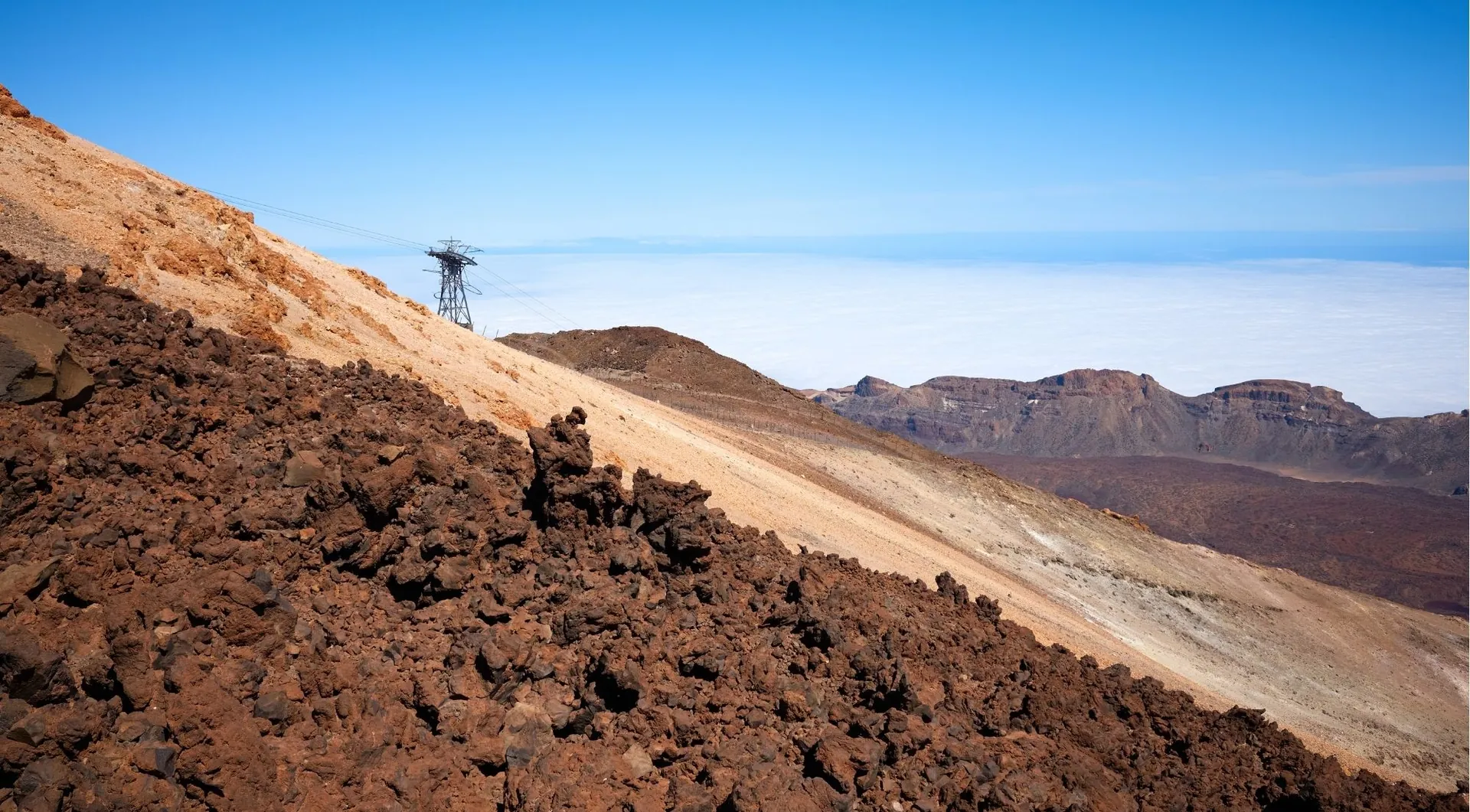
In about eight minutes the Teide cable car lifts you roughly 1,199 vertical metres, from a base station at 2,356 m to La Rambleta at 3,555 m. That is an unusual amount of high mountain for almost no physical effort, and it is the whole case for the ticket: you get an alpine environment without an alpine day. Up there the air is thin, the ground is bare pumice and lava, and on a clear afternoon the view runs out across the Atlantic to La Gomera, La Palma, El Hierro and Gran Canaria.
Two things temper that. The first is that the lift does not reach the summit — it stops about 160 vertical metres below the crater, and the final Telesforo Bravo trail is a separate, permit-only walk. The second is that the cable car is genuinely unreliable: high wind and ice close it often, and there is no warning far enough ahead to plan around. Book a time slot in advance, check the operator's status the morning you travel, and never let the ride be the only reason you drove up.
The honest counter-argument is simpler still. If what draws you to Teide is the volcanic landscape — Roques de García, the Llano de Ucanca, the drive across Las Cañadas — none of that needs a ticket. The park is free. The cable car adds altitude and island views on top of scenery you can already have for nothing, which makes it a genuine upgrade rather than the price of admission.
Buy the ticket if
- The forecast is clear and the operator is running — visibility is the whole product
- It is your first visit and standing at 3,555 m is part of what you came for
- You want high-mountain views without a five-hour uphill hike
- You have limited time and want the most altitude per hour of the day
- You want Trail 11 and Trail 12, which are only reachable from the top station
Skip it if
- Cloud is sitting on the upper mountain — you pay for a view you will not get
- Your interest is the lava fields and rock formations, which are all at road level
- Anyone in your group is on the operator's excluded list (see below)
- You are going for sunset or stars, when the caldera floor is the better place to be
- You would rather spend the time on the Roques de García loop, which is free
Check Availability & Prices
Volcano Teide runs the cable car and this tour, so the round-trip ticket, the transfer and the timed slot come as one booking rather than three separate problems.
Operated by Volcano Teide with pickup from the north and south of the island and a guide in up to six languages. Seven hours door to door. Booking the lift on its own is possible through the operator's site — this is the version that also solves the mountain drive and the parking.
What the Ticket Actually Gets You: La Rambleta, Two Trails, One View
From the base station to the Mirador de La Fortaleza and the Mirador de Pico Viejo — everything the ride opens up, and where it stops.
-
The ride itself — 8 minutes, 1,199 m
A glass, standing-room cabin. Short enough that nervous riders rarely have time to mind the swing, steep enough that the pumice slopes below change character on the way up. Bring the warm layer you are carrying; you will want it at the top.
-
La Rambleta — 3,555 m
The top station, and where every cable-car ticket ends. There is no restaurant up here and the toilets are at the base, so deal with both before you ride. The operator advises keeping the visit to about an hour, which is sound: the ascent is fast enough that altitude catches people out.
-
Trail 11 to the Mirador de La Fortaleza — free, no permit
A short walk north along the rim to a viewpoint over the Orotava valley and the island's green northern side. Uneven ground and loose rock, so proper shoes matter more than the distance suggests.
-
Trail 12 to the Mirador de Pico Viejo — free, no permit
The better of the two on a clear day. It looks straight down into Pico Viejo's crater, roughly 800 m across, with La Gomera on the horizon beyond it. This is the view most people picture when they picture the cable car.
-
Where the ticket stops — the Telesforo Bravo trail
The gate to the summit path starts here and a ranger checks names against reservations. Without a PNT 10 permit you turn around at this point. That is not a flaw in the ticket; it is simply a different booking, covered in our guide to the 2026 summit permit.
A stargazing night under the Starlight skies at Las Cañadas, a guided climb of the Telesforo Bravo trail to the summit, the Mount Teide Observatory at Izaña, or a day out to the Masca gorge and the Drago Milenario dragon tree at Icod de los Vinos — all worth adding to a Teide trip if your schedule allows.
Teide Cable Car Tickets Explained: Return, One-Way, Bundled and After Hours
Which one suits which day — and the one line on every ticket that does not mean what people assume.
Round trip — the default
Up and down, booked with a time slot for the ascent. This is what almost everyone wants, and what tour packages include. Buy it in advance: slots sell out days ahead in peak season, and the ride is the part of a Teide day that cannot be improvised.
One-way up
For people who intend to walk down. The descent on foot is long — the Montaña Blanca route runs about 8.3 km — so this is a deliberate plan, not a way to save a few euros. Deciding it on a whim at the top station is a well-documented mistake.
One-way down
The classic pairing with a full ascent on foot: five to six hours up Montaña Blanca, then ride down. Trail 7 needs its own permit, and the plan only works if the lift is running and you make the last car — miss it and you are walking.
Bundled into a tour
The ticket, the transfer from your resort and a guide in one booking. It costs more than the bare ticket and removes the mountain drive, the parking scramble and the risk of holding a ticket for a lift that turns out to be shut.
Sunset and night services
The cable car runs outside standard hours for sunset and stargazing experiences, with far smaller capacity — around 90 people at sunset. These are booked as experiences rather than as plain tickets, and they go early.
Resident and child pricing
Canary Islands residents get a discounted fare on production of ID. Separately, the operator does not carry children under 3 at all — an age limit, not a discount, and worth checking before you book for a family.
The line that catches people out: a cable-car ticket is not a summit permit. They are separate bookings, sold by different systems — the lift through the operator, the PNT 10 Telesforo Bravo trail only through TenerifeON, at €15 for non-residents since 19 January 2026. Guided summit climbs commonly quote the cable-car leg on top of their price, typically €22 to €24 per person, which tells you plainly that the two have never been the same thing.
Who Cannot Ride the Teide Cable Car
Health restrictions, the accessibility position and the footwear rule that turns people away at the barrier.
Health exclusions
The operator does not carry pregnant travellers, people with cardiac or cardiovascular conditions, people with serious respiratory conditions, or children under 3. Recent surgery and anaemia are flagged as cautions. If any of that applies, take medical advice before booking rather than at the top station.
Mobility and accessibility
The base station has toilets and a café and is broadly accessible; the cable car and the upper station are not. People with motor or physical disability are restricted because evacuation cannot be guaranteed within the required time, and the upper trails are uneven with loose rock.
Footwear is enforced
Closed mountain or sports shoes with high-grip, non-slip soles are compulsory. Heels, platforms, flat-soled shoes, water and beach shoes and any open shoe are expressly refused. This is checked, and it is the most avoidable way to lose a booked slot.
Altitude, for everyone else
The ride delivers you to 3,555 m with no acclimatisation, and mild altitude sickness is common: headache, nausea, dizziness, breathlessness. It hits hardest if you arrive dehydrated or hungover. Drink water, move slowly, rest on arrival, and if symptoms build, go down — descending is the treatment.
The Cable Car Is Closed. Now What?
Wind and ice shut the lift often enough that you should have a plan before you drive up, not after. The good news is that the closure takes away one attraction, not the day — the park stays open and free, and the scenery most people remember is all at road level.
- Check before you leaveThe operator publishes its status each morning. Conditions at your beach resort tell you nothing about 3,555 m — check the mountain, not the forecast on your balcony.
- Walk the Roques de García loop3.5–4.5 km, 1.5–2 hours, about 130 m of ascent, starting opposite the Parador. Roque Cinchado, La Cascada, La Catedral and the drop to the Llano de Ucanca. No ticket, no permit.
- Drive the caldera insteadThe TF-21 between Boca Tauce and El Portillo is the signature stretch. Stop at Los Azulejos, Minas de San José and the Llano de Ucanca — the Mars-analogue ground the space agencies actually use.
- Use the visitor centresEl Portillo has the geology exhibits and a walk-through volcanic tube; Cañada Blanca by the Parador covers the human history of Las Cañadas. Both are indoors, which matters on a wind day.
- Do not improvise the summitIf the lift is shut, walking up instead is not a substitute. It needs a permit, the right kit and most of a day. If snow or ice has closed the access roads, do not attempt them either.
- Know your refund positionIndependent tickets are typically refunded or rescheduled. Some tours go further: the Volcano Teide day tour runs an alternative route anyway and refunds the cable-car portion of the price.
If the Cable Car Isn't Your Priority
Both of these reach the caldera, the viewpoints and Roques de García. Neither depends on the wind.
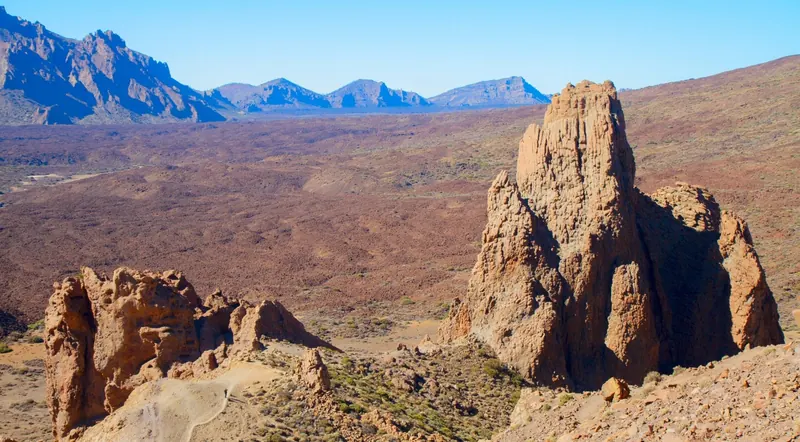 The operator's own no-lift day
Day Trip to Volcano Teide Without Cable Car
Includes: the guided park excursion, transport from the north, south or Santa Cruz, the “Teide Legend” audio guide in eight languages and entry to the Science and Legend exhibition. No cable-car ticket, by design.
Check availability
The operator's own no-lift day
Day Trip to Volcano Teide Without Cable Car
Includes: the guided park excursion, transport from the north, south or Santa Cruz, the “Teide Legend” audio guide in eight languages and entry to the Science and Legend exhibition. No cable-car ticket, by design.
Check availability
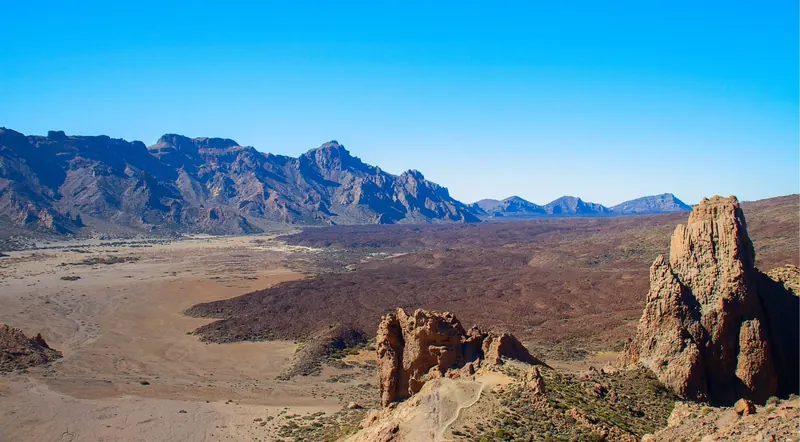 Best small-group park tour
From South Tenerife: Teide National Park Tour
Includes: hotel pickup and drop-off, a maximum of eight passengers and a flexible start time. The cable car is not included, which on a windy week is a feature rather than a gap.
Check availability
Best small-group park tour
From South Tenerife: Teide National Park Tour
Includes: hotel pickup and drop-off, a maximum of eight passengers and a flexible start time. The cable car is not included, which on a windy week is a feature rather than a gap.
Check availability
Teide Cable Car FAQ
Short answers to the things that decide whether the ticket is worth it for you.
Does the Teide cable car go to the summit?
No. It ends at La Rambleta, 3,555 m. The summit is 3,715 m, about 160 vertical metres higher, and the final Telesforo Bravo trail needs a separate PNT 10 permit booked through TenerifeON. A cable-car ticket does not include it.
How long does the Teide cable car take?
About eight minutes each way. It climbs roughly 1,199 vertical metres, from the base station at 2,356 m to La Rambleta at 3,555 m.
Do you need to book the Teide cable car in advance?
Yes in practice. Tickets are sold online with a time slot and regularly sell out days ahead in peak season. Turning up hoping for a same-day slot is the most common way people miss the ride entirely.
Is the Teide cable car worth the money?
On a clear day, for a first visit, yes: it is an unusual amount of high-mountain access for very little effort, and it opens two free viewpoint trails you cannot otherwise reach. In cloud or high wind it is poor value, and if what you came for is the volcanic landscape, the caldera floor is free and needs no ticket.
What happens if the Teide cable car is closed?
Closures for wind and ice are common. Check the operator's status on the morning of your visit. The park itself stays open and free, so Roques de García, the Llano de Ucanca and the TF-21 caldera drive are unaffected. Some tours run an alternative route and refund the cable-car portion of the price; independent tickets are typically refunded or rescheduled.
Who cannot ride the Teide cable car?
The operator does not carry pregnant travellers, people with cardiac or serious respiratory conditions, or children under 3, and restricts people with motor or physical disability because evacuation cannot be guaranteed within the required time. It is not wheelchair accessible, and closed high-grip footwear is compulsory — heels, platforms, beach shoes and open shoes are refused.
Can you walk up Mount Teide and take the cable car down?
Yes, and many people do. The usual route is the Montaña Blanca trail, about 8.3 km and 1,350 m of ascent, taking five to six hours up, then a one-way ticket down. Trail 7 needs its own permit, and the descent depends on the lift running and on you making the last car.
Is there anything to do at the top of the Teide cable car?
Two short trails, both free and permit-free: Trail 11 to the Mirador de La Fortaleza, looking north over the Orotava valley, and Trail 12 to the Mirador de Pico Viejo, looking down into an 800-metre crater. There is no restaurant at the top station, and the operator advises limiting time at altitude to about an hour.
More on Planning a Teide Day
The rest of the decision: which tour, the summit permit, and when to go.
- Summit & the 2026 permitWhy the lift stops 160 m short, how TenerifeON works, and the guided climbs that handle it.
- Compare Teide toursWhat each kind of trip is for, and the one thing to check before booking.
- What you'll see in the parkLas Cañadas, Roques de García, Pico Viejo and the sea of clouds.
- Best time to visit Mount TeideThe clearest months, the busiest hours, winter snow and closed roads, and a date checker for your day.
- Sunset & stargazingThe Teide shadow, then telescopes under a Bortle 2 sky.
- Mount Teide FAQPermits, weather, kids and altitude, answered briefly.